Overview of Rosenberger Cat6A 23AWG UTP Cable 305M
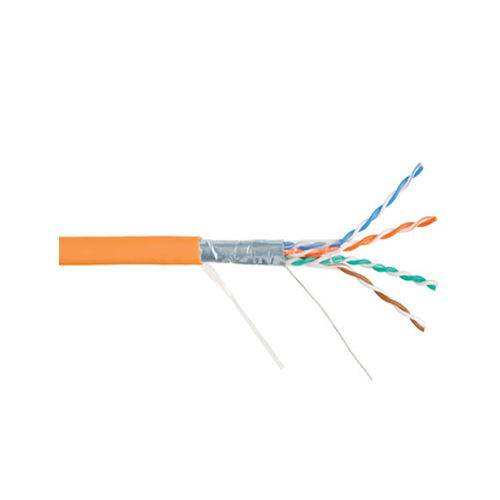
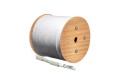
The Rosenberger CP11-171-12 is a Cat6A 23AWG UTP network cable supplied in a 305-meter bulk length. It is designed for professional structured Ethernet cabling installations requiring high-performance copper network infrastructure.
As a Category 6A (Cat6A) cable, it is designed for higher-performance Ethernet applications than conventional Cat6 cabling and is suitable for structured cabling environments supporting high-bandwidth network connectivity.
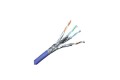
The cable uses 23 AWG conductors and Unshielded Twisted Pair (UTP) construction with four twisted pairs. It is suitable for professional network infrastructure, including enterprise LANs, server rooms, data centers, telecommunications rooms, and other high-speed Ethernet environments.
Key Features
- Cat6A Category: Designed for Category 6A structured Ethernet cabling applications.
- 23 AWG Conductor: Uses 23 AWG conductors for professional structured-cabling installations.
- UTP Construction: Unshielded Twisted Pair design for Ethernet network infrastructure.
- 305-Meter Length: Supplied as bulk cable for professional installation projects.
- Four-Pair Configuration: Provides four twisted pairs for modern Ethernet applications.
- 10 Gigabit Ethernet: Cat6A cabling is designed to support 10GbE applications within appropriate channel-length and installation requirements.
- High-Bandwidth Infrastructure: Suitable for network environments requiring higher data-transfer capacity.
- Permanent Cabling: Suitable for structured horizontal cabling and fixed network runs.
- Patch Panel Compatibility: Suitable for termination with compatible Cat6A patch panels.
- Keystone Jack Compatibility: Suitable for compatible Cat6A RJ45 modular jacks and network outlets.
- Enterprise Applications: Suitable for offices, server rooms, data centers, telecommunications rooms, and enterprise networks.
- Versatile Applications: Suitable for computers, IP cameras, PoE devices, VoIP phones, wireless access points, printers, and other compatible Ethernet equipment.
Technical Specifications
| Specification |
Details |
| Brand |
Rosenberger |
| Model / Part Number |
CP11-171-12 |
| Product Type |
Bulk Ethernet Network Cable |
| Category |
Cat6A |
| Cable Type |
UTP — Unshielded Twisted Pair |
| Conductor Gauge |
23 AWG |
| Cable Length |
305 Meter |
| Pair Configuration |
4-Pair |
| Application |
Structured Ethernet Cabling |
| Installation Type |
Permanent / Horizontal Cabling |
| Termination |
Compatible Cat6A RJ45 / Keystone Modules and Patch Panels |
| Network Application |
High-Speed Ethernet / 10 Gigabit Ethernet |
Cat6A Network Cable
The Rosenberger CP11-171-12 is a Category 6A Ethernet cable designed for high-performance structured network infrastructure.
Cat6A is commonly selected for installations requiring support for higher-bandwidth Ethernet applications, particularly 10 Gigabit Ethernet.
Compared with Cat6 infrastructure, Cat6A is designed with tighter performance requirements for higher-frequency operation and improved suitability for 10GbE structured cabling.
23 AWG Conductor
The cable uses 23 AWG conductors. American Wire Gauge identifies the approximate conductor size, with a lower AWG number representing a larger conductor.
23 AWG is commonly used in professional structured network cabling and provides a robust conductor size for permanent Ethernet infrastructure.
UTP Construction
UTP stands for Unshielded Twisted Pair. The cable does not use an overall metallic shield.
The conductors are arranged as twisted pairs to help control electromagnetic interference and maintain the electrical characteristics required for Ethernet transmission.
UTP Cat6A is suitable for many enterprise and commercial Ethernet installations where the cabling environment does not require shielded construction.
Four-Pair Ethernet Configuration
The CP11-171-12 uses a four-pair Ethernet configuration, providing the eight conductors used by standard four-pair Ethernet cabling.
Proper termination of all four pairs is important for modern high-speed Ethernet applications.
10 Gigabit Ethernet Applications
One of the major advantages of Cat6A infrastructure is its suitability for 10 Gigabit Ethernet (10GbE) applications.
Cat6A is commonly deployed where organizations require high-bandwidth copper Ethernet connectivity for servers, network switches, workstations, storage systems, access points, and other network equipment.
Actual 10GbE performance depends on the complete cabling channel, installation practices, cable length, termination hardware, and active network equipment.
305-Meter Bulk Cable
The 305-meter bulk length is suitable for professional structured-cabling projects where multiple permanent cable runs need to be installed throughout a building or facility.
Installers can measure and cut individual cable runs according to the network layout, then terminate them at compatible patch panels and network outlets.
Permanent Horizontal Cabling
The cable is suitable for permanent structured cabling between telecommunications rooms, network cabinets, and network outlets.
Permanent cable routes may pass through cable trays, conduits, raised floors, ceilings, walls, and other building infrastructure according to the project requirements.
Cat6A Patch Panel Termination
In a typical structured-cabling system, one end of the cable is terminated at a compatible Cat6A patch panel.
The patch panel provides a centralized termination point for network cable runs and allows short patch cords to connect the permanent cabling to network switches.
For Cat6A performance, compatible Cat6A-rated patch panels and termination hardware should be used.
Cat6A Keystone Jack Termination
The opposite end of the permanent cable can be terminated at a compatible Cat6A RJ45 keystone jack.
The modular jack can then be installed in a faceplate, surface box, floor outlet, or modular patch panel to provide a structured network connection point.
High-Bandwidth Network Infrastructure
Cat6A is suitable for network environments where higher bandwidth is required or where the organization wants additional cabling capacity for future network upgrades.
Typical applications include high-performance workstations, servers, network storage, data-center connectivity, high-speed uplinks within suitable copper architectures, and advanced wireless access points.
Enterprise Network Applications
Enterprise organizations can deploy Cat6A UTP cabling to provide high-speed Ethernet connections throughout offices, floors, server rooms, and telecommunications areas.
The 305-meter bulk format allows installers to create multiple permanent links from centralized network distribution points.
Server Room Applications
Cat6A can be used in server rooms to connect compatible servers, switches, storage systems, management systems, and other network equipment.
Proper rack layout, cable management, labeling, bend-radius control, and patch-panel organization should be maintained to ensure a clean and serviceable installation.
Data Center Applications
Cat6A structured cabling can be used for compatible copper Ethernet connections in data-center environments.
For data-center installations, cable density, airflow, routing, bend radius, separation from power cables, labeling, and performance requirements should be carefully considered.
Wireless Access Point Applications
Modern wireless access points can require high-speed wired uplinks. Cat6A provides a suitable structured-cabling platform for compatible high-performance access points.
Where an access point requires PoE, the connected PoE switch or injector must provide the appropriate power and comply with the requirements of the access point.
IP Camera Applications
The cable can be used for compatible IP surveillance infrastructure.
For PoE-powered cameras, the complete Ethernet channel should use compatible components and the network switch or injector must provide the required PoE power.
VoIP Applications
Cat6A UTP cabling can provide structured Ethernet connectivity for compatible IP phones and VoIP systems.
The cable can be terminated at patch panels and network outlets, with flexible patch cords used for equipment connections.
Network Storage Applications
High-performance network storage systems can benefit from high-bandwidth copper Ethernet infrastructure when the connected equipment supports the corresponding Ethernet standard.
Cat6A cabling can provide the physical copper infrastructure required for compatible high-speed network connections.
Workstation Connectivity
Cat6A can be installed from centralized network cabinets to high-performance workstation outlets.
This can provide a structured copper network foundation for engineering workstations, content-creation systems, data-intensive applications, virtualization environments, and other high-bandwidth users.
UTP vs Shielded Cat6A
The CP11-171-12 is specified as UTP, meaning it does not use an overall metallic shield.
Shielded Cat6A cabling may be preferred in environments with significant electromagnetic interference or where the project specification requires shielded infrastructure. UTP and shielded systems should not be mixed indiscriminately because grounding and component compatibility requirements differ.
Cable Management
Cat6A cables should be routed carefully to avoid excessive bending, crushing, stretching, or mechanical pressure.
Appropriate cable managers, trays, pathways, and rack accessories should be used to maintain organized infrastructure and support long-term maintenance.
Termination Standards
The cable should be terminated using the applicable Ethernet wiring scheme, typically T568A or T568B.
The selected termination scheme should be applied consistently throughout the relevant structured-cabling installation.
Cable Bend Radius
High-performance Ethernet cabling can be sensitive to installation practices. The cable should not be sharply bent or compressed, and the manufacturer's recommended bend radius should be maintained.
Excessive mechanical stress can affect the electrical characteristics of the cable and potentially reduce channel performance.
Separation from Power Cables
Network cabling should be routed and separated from electrical power cables according to applicable installation standards and local regulations.
Proper routing helps reduce the possibility of electromagnetic interference and supports a clean structured-cabling installation.
Cat6 vs Cat6A
Cat6A is designed for higher-frequency and higher-performance Ethernet applications than standard Cat6.
| Feature |
Cat6 |
Cat6A |
| Category |
Category 6 |
Category 6A |
| Typical High-Speed Application |
Gigabit Ethernet and selected higher-speed applications |
10 Gigabit Ethernet |
| Bandwidth Class |
Lower than Cat6A |
Higher than Cat6 |
| Future Upgrade Capacity |
Good |
Higher for high-speed copper Ethernet |
| Typical Use |
General structured Ethernet |
High-performance structured Ethernet |
For new installations where 10GbE over copper is an objective, Cat6A is often selected to provide an appropriate cabling platform.
Bulk Cable vs Patch Cord
Bulk network cable is intended for permanent structured-cabling runs and is normally terminated during installation.
Patch cords are generally factory terminated and designed for flexible connections between network equipment, patch panels, and network outlets.
The Rosenberger CP11-171-12 is intended primarily for permanent structured Ethernet cabling.
Installation Planning
Before installation, determine the locations of network cabinets, telecommunications rooms, patch panels, network outlets, wireless access points, cameras, and other network devices.
Plan cable routes and allow appropriate service loops while avoiding excessive cable slack and unnecessary bends.
Cable Labeling
Every permanent cable run should be labeled at both ends.
A consistent labeling system allows installers and network administrators to quickly identify the relationship between network outlets, patch-panel ports, switches, and connected equipment.
Testing and Certification
After installation and termination, Cat6A permanent links should be tested using suitable network cable verification or certification equipment according to the project's requirements.
Testing can identify wiring errors, continuity problems, excessive attenuation, crosstalk, return-loss issues, and other installation-related faults.
PoE Applications
Cat6A UTP cabling can be used as part of compatible Power over Ethernet installations, including suitable wireless access points, IP cameras, VoIP phones, and other PoE devices.
The connected PoE switch or injector must support the required PoE standard and power level, and the complete cabling channel should be suitable for the intended application.
Applications
- Cat6A structured cabling
- 10 Gigabit Ethernet networks
- High-speed LAN infrastructure
- Enterprise networks
- Data centers
- Server rooms
- Telecommunications rooms
- Network cabinets
- High-performance workstations
- Network storage infrastructure
- IP surveillance networks
- PoE networks
- VoIP networks
- High-speed wireless access points
- Commercial buildings
- Corporate offices
- Educational institutions
- Structured cabling projects
Why Choose Rosenberger CP11-171-12?
The Rosenberger Cat6A 23AWG UTP Cable 305M | CP11-171-12 provides a professional Cat6A copper cabling solution for high-speed structured Ethernet infrastructure.
Its 23 AWG conductor, UTP construction, four-pair configuration, Cat6A category, and 305-meter bulk format make it suitable for enterprise networks, data centers, server rooms, offices, telecommunications rooms, and other professional network installations.
For organizations planning 10 Gigabit Ethernet over copper, Cat6A provides a suitable structured-cabling foundation when the complete channel is designed and installed according to the applicable requirements.
Buy Rosenberger Cat6A 23AWG UTP Cable 305M in Bangladesh
The Rosenberger Cat6A 23AWG UTP Cable 305M | CP11-171-12 is suitable for network installers, structured-cabling contractors, IT professionals, system integrators, offices, businesses, data centers, server rooms, educational institutions, and enterprise network projects in Bangladesh.
Before purchasing, confirm the required Cat6A category, conductor gauge, UTP construction, cable length, termination hardware, installation environment, and applicable project standards.
Why Buy from Independent Tech BD?
- Networking & IT Products
- Structured Cabling Solutions
- Rosenberger Networking Components
- Cat6, Cat6A and Ethernet Cabling
- High-Speed Network Infrastructure
- Patch Panels and Modular Jacks
- Rack & Data Center Solutions
- Enterprise IT Solutions
- Corporate & Project Supply
- Technical Assistance
- Product Compatibility Support
- Competitive Price in Bangladesh
- Nationwide Delivery
- Reliable After-Sales Service
Independent Tech BD supplies Rosenberger Cat6 and Cat6A cables, patch cords, patch panels, modular jacks, faceplates, cable managers, fiber-optic products, network switches, routers, racks, and structured-cabling accessories for home, office, corporate, ISP, and enterprise network installations.
Frequently Asked Questions
What is the Rosenberger CP11-171-12?
The CP11-171-12 is a Rosenberger Cat6A 23AWG UTP network cable supplied in a 305-meter bulk length.
What category is this Rosenberger cable?
It is a Cat6A structured Ethernet cable.
What is the conductor gauge?
The specified conductor gauge is 23 AWG.
Is the cable UTP or shielded?
It is specified as UTP — Unshielded Twisted Pair. It does not use an overall metallic shield.
How long is the cable?
The cable is supplied in a 305-meter bulk length.
Can I use this cable for 10 Gigabit Ethernet?
Yes. Cat6A is designed for 10 Gigabit Ethernet applications when the complete cabling channel, installation length, termination components, and active equipment meet the relevant requirements.
Is Cat6A better than Cat6?
Cat6A is designed for higher-frequency and higher-performance Ethernet applications than standard Cat6 and is particularly suited to 10GbE structured cabling.
Is this cable suitable for permanent installation?
Yes. Its structured-cabling design and bulk format make it suitable for permanent network cable runs when installed according to the applicable requirements.
Can I use it with a Cat6A patch panel?
Yes. A compatible Cat6A patch panel should be used when designing a Cat6A channel.
Can I use it with a Cat6A keystone jack?
Yes. Compatible Cat6A RJ45 keystone modules can be used to terminate the cable at network outlets or modular patch panels.
Can I use this cable for IP cameras?
Yes. It can be used for compatible IP surveillance installations. For PoE cameras, the complete cabling channel and connected PoE equipment must support the required application.
Can I use this cable for Wi-Fi access points?
Yes. Cat6A is suitable for high-performance Ethernet connections to compatible wireless access points. PoE requirements must be supported by the network infrastructure.
Can I use it for VoIP phones?
Yes. Cat6A UTP structured cabling is suitable for compatible IP phone and VoIP installations.
What is the difference between Cat6 and Cat6A?
Cat6A is designed for higher-frequency operation and is specifically suited to 10 Gigabit Ethernet over appropriate copper structured-cabling channels. Cat6 is commonly used for Gigabit Ethernet and other compatible Ethernet applications.
What is the difference between 23 AWG and 24 AWG?
23 AWG conductors are slightly larger than 24 AWG conductors. The appropriate conductor size should be selected based on the required electrical characteristics, installation requirements, and termination compatibility.
Does this cable include RJ45 connectors?
No. This is a 305-meter structured network cable. Compatible RJ45 modules, keystone jacks, patch panels, and patch cords are selected separately according to the installation design.
Can I use this cable as a patch cord?
It is primarily intended for permanent structured cabling. Factory-terminated flexible patch cords are generally preferred for equipment connections.
What wiring standard should I use?
The cable can be terminated according to the applicable T568A or T568B wiring scheme. The selected scheme should be applied consistently throughout the relevant installation.
Can this cable support PoE?
It can be used as part of compatible PoE installations. The connected PoE equipment, termination components, and complete cabling channel must support the required PoE application.
Should Cat6A cable be tested after installation?
Yes. Professional Cat6A structured-cabling installations should be tested using suitable cable verification or certification equipment according to the project's requirements.
Can I use this cable in a server room?
Yes. Cat6A UTP cabling is suitable for compatible server-room and telecommunications-room applications.
Can I use it in a data center?
Yes, for compatible Cat6A copper structured-cabling applications. Data-center deployments should consider cable routing, bend radius, cable density, airflow, labeling, separation from power cables, and performance requirements.
Where can I buy Rosenberger Cat6A 23AWG UTP Cable 305M in Bangladesh?
The Rosenberger CP11-171-12 305M Cat6A UTP Cable can be sourced through professional networking and structured-cabling suppliers in Bangladesh, including Independent Tech BD.




-120x80h.png "MERCUSYS MS106P 6-Port 10/100Mbps Desktop Switch with 4-Port PoE+ (67W PoE Budget)")