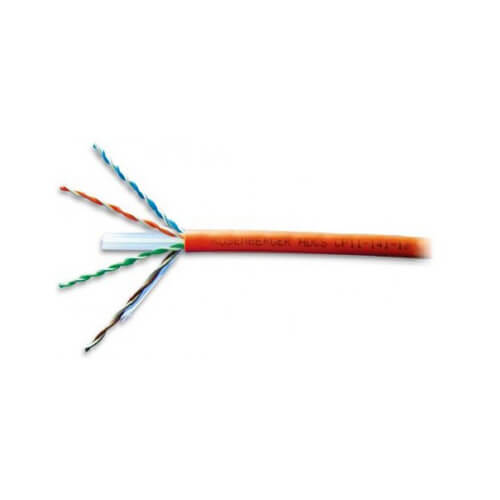
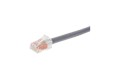
Overview of Rosenberger Cat6 23AWG LSZH UTP Cable
The Rosenberger CP11-141-13 is a Cat6 23AWG UTP network cable featuring a Low Smoke Zero Halogen (LSZH) jacket. It is designed for professional structured Ethernet cabling installations where reliable network connectivity and reduced smoke and halogen-free cable materials are important considerations.
The cable uses 23 AWG conductors and Unshielded Twisted Pair (UTP) construction with four twisted pairs. It is intended for structured network infrastructure and can be used for compatible Gigabit Ethernet applications when installed with appropriate Cat6 components throughout the complete cabling channel.
The LSZH jacket makes this cable particularly suitable for installations where low-smoke and halogen-free cable materials are preferred or required by the project specification, building environment, or applicable installation standards.
Key Features
- Cat6 Category: Designed for Category 6 structured Ethernet cabling applications.
- 23 AWG Conductor: Uses 23 AWG conductors for professional structured network installations.
- UTP Construction: Unshielded Twisted Pair design for standard Ethernet network infrastructure.
- LSZH Jacket: Low Smoke Zero Halogen construction designed to reduce smoke and avoid halogen-containing jacket materials under fire conditions.
- Four-Pair Configuration: Provides four twisted pairs for modern Ethernet connectivity.
- Gigabit Ethernet Applications: Suitable for Gigabit Ethernet applications when combined with compatible Cat6 components.
- Permanent Cabling: Suitable for fixed structured-cabling and horizontal network runs.
- Patch Panel Compatibility: Suitable for termination at compatible Cat6 patch panels.
- Keystone Jack Compatibility: Suitable for compatible Cat6 RJ45 modular jacks and network outlets.
- Professional Installation: Suitable for offices, commercial buildings, server rooms, data centers, telecommunications rooms, and enterprise networks.
- Versatile Applications: Suitable for computers, IP cameras, VoIP phones, wireless access points, printers, and other Ethernet devices.
Technical Specifications
| Specification |
Details |
| Brand |
Rosenberger |
| Model / Part Number |
CP11-141-13 |
| Product Type |
Ethernet Network Cable |
| Category |
Cat6 |
| Cable Type |
UTP — Unshielded Twisted Pair |
| Conductor Gauge |
23 AWG |
| Jacket Type |
LSZH — Low Smoke Zero Halogen |
| Pair Configuration |
4-Pair |
| Application |
Structured Ethernet Cabling |
| Installation Type |
Permanent / Horizontal Cabling |
| Termination |
Compatible RJ45 / Keystone Modules and Patch Panels |
| Network Application |
Gigabit Ethernet and Compatible Ethernet Networks |
Cat6 UTP Network Cable
The Rosenberger CP11-141-13 is a Category 6 UTP Ethernet cable designed for structured network infrastructure.
Cat6 cabling is widely used for modern wired Ethernet networks where reliable high-speed connectivity is required. The cable is intended primarily for permanent structured-cabling runs rather than flexible equipment patching.
23 AWG Conductor
The cable uses 23 AWG conductors. American Wire Gauge identifies conductor size, with a lower AWG number representing a larger conductor.
23 AWG is commonly used in professional structured Ethernet cabling and provides a suitable conductor size for permanent network infrastructure.
LSZH Cable Jacket
LSZH stands for Low Smoke Zero Halogen. LSZH cable jackets are designed to produce reduced smoke and no intentionally added halogen-based jacket material when exposed to fire, compared with conventional halogen-containing cable materials.
This characteristic can be important in enclosed or occupied environments where smoke and corrosive gas emissions are a consideration during a fire.
LSZH cable is commonly specified for certain commercial, transportation, telecommunications, data-center, public-building, and other environments depending on local codes and project requirements.
Benefits of LSZH Construction
- Reduced smoke generation compared with many conventional halogen-containing cable jackets.
- Halogen-free jacket material.
- Can help reduce exposure to corrosive halogen-based gases during combustion.
- Suitable for installations where low-smoke cable materials are specified.
- Useful for enclosed and occupied environments where smoke characteristics are an important design consideration.
Actual fire performance and regulatory suitability should always be confirmed against the cable's applicable certifications and the requirements of the specific installation.
UTP Construction
UTP stands for Unshielded Twisted Pair. The cable does not use an overall metallic shield. Instead, the individual conductors are arranged into twisted pairs to help control electromagnetic interference and maintain the electrical characteristics required for Ethernet transmission.
UTP cabling is widely used in office networks, commercial buildings, enterprise LANs, IP surveillance systems, VoIP networks, and wireless access point infrastructure.
Four-Pair Ethernet Configuration
The CP11-141-13 uses a four-pair Ethernet configuration, providing the eight conductors required for standard four-pair structured Ethernet cabling.
Correct termination of all four pairs is important for Ethernet applications that require four-pair transmission.
Permanent Horizontal Cabling
The cable is suitable for permanent structured cabling between a telecommunications room or network cabinet and network outlets.
Permanent cable runs may be routed through suitable cable trays, conduits, ceilings, raised floors, walls, and other building infrastructure according to the installation requirements.
Patch Panel Termination
In a typical structured-cabling installation, one end of the permanent cable is terminated at a compatible Cat6 patch panel.
The patch panel provides a centralized termination point where individual cable runs can be labeled and connected to Ethernet switches using patch cords.
Network Outlet Termination
The other end of the permanent cable can be terminated at a compatible Cat6 RJ45 keystone jack installed in a wall faceplate, floor outlet, or other network outlet.
This creates a fixed Ethernet connection point for computers, printers, IP phones, access points, cameras, and other network devices.
Gigabit Ethernet Applications
Cat6 UTP cabling is widely used for Gigabit Ethernet network infrastructure.
When installed with compatible Cat6 patch panels, modular jacks, patch cords, and active network equipment, the CP11-141-13 can form part of a Gigabit Ethernet structured cabling channel.
Actual network performance depends on the complete cabling channel and the capabilities of the connected network equipment.
Structured Cabling System
A structured cabling system typically includes permanent horizontal cable, patch panels, modular jacks, faceplates, patch cords, cable managers, switches, routers, and other network infrastructure.
The Rosenberger CP11-141-13 functions primarily as the permanent network-cable component within such an infrastructure.
Office Network Applications
The cable can be installed throughout offices to provide permanent Ethernet connections for workstations, printers, IP phones, conference rooms, meeting rooms, wireless access points, and other network devices.
The LSZH construction can be useful in office environments where project specifications call for low-smoke and halogen-free cabling.
Enterprise Network Applications
Enterprise buildings can use Cat6 LSZH UTP cable to create permanent Ethernet links from telecommunications rooms to individual work areas.
The cable is suitable for structured LAN infrastructure where multiple network outlets are distributed throughout a building.
Server Room Applications
Server rooms and telecommunications rooms can use Cat6 UTP bulk or permanent cable as part of structured network infrastructure connecting network racks to distributed network outlets.
Appropriate patch panels, cable managers, modular jacks, and rack accessories should be used to maintain an organized installation.
Data Center Applications
Cat6 LSZH structured cabling can be used for compatible copper Ethernet connections in server and data-center environments.
For data-center deployments, cable routing, airflow, cable density, bend radius, fire-performance requirements, labeling, and network-performance requirements should be considered during installation.
IP Camera Applications
The CP11-141-13 can be used as permanent Ethernet cabling for compatible IP surveillance systems.
For PoE-powered IP cameras, the complete cabling channel should be compatible with the required PoE application, while the connected PoE switch or injector must provide the necessary power.
VoIP Applications
The cable can provide permanent structured Ethernet connectivity for compatible IP phones and VoIP systems.
Permanent cable runs can terminate at patch panels and network outlets, while flexible patch cords provide the final connections to switches and IP phones.
Wireless Access Point Applications
The cable is suitable for permanent Ethernet connections to wireless access points installed on ceilings, walls, or other locations.
Where an access point requires PoE, a compatible PoE switch or injector should be used to provide the required power over Ethernet.
Network Printer Applications
Cat6 structured cabling can provide wired Ethernet connections for compatible network printers and multifunction devices distributed throughout offices and commercial facilities.
Workstation Connectivity
The cable can be installed between a central network rack and workstation network outlets. Suitable patch cords can then connect desktop computers, docking stations, IP phones, and other Ethernet devices to the wall outlet.
Low-Smoke Cabling Environments
LSZH cabling can be considered for environments where smoke generation and halogen-free materials are important design criteria.
Examples may include occupied commercial buildings, telecommunications rooms, transportation facilities, public buildings, and other projects where the applicable specification calls for LSZH cabling.
The final cable selection should always be based on the applicable local fire, building, electrical, and structured-cabling requirements.
Cable Management
During installation, the cable should be routed using suitable cable trays, conduits, raceways, or other approved infrastructure.
Proper cable management helps protect the cable from excessive mechanical stress and keeps the installation organized for future maintenance.
Termination Standards
The cable should be terminated using the applicable Ethernet wiring scheme, typically T568A or T568B.
The selected wiring scheme should be applied consistently throughout the relevant structured-cabling installation.
Cable Bend Radius
During installation, the cable should not be sharply bent, crushed, stretched, or subjected to excessive pulling force.
Maintaining the appropriate bend radius helps preserve the cable's electrical characteristics and transmission performance.
UTP vs Shielded Cable
UTP cable does not include an overall metallic shield. It is widely used in standard office, commercial, residential, and enterprise Ethernet installations.
Shielded cabling may be considered in environments with significant electromagnetic interference, depending on the project requirements. The appropriate cable construction should be selected based on the installation environment.
LSZH vs PVC Cable
LSZH and PVC refer primarily to cable-jacket material characteristics. LSZH cables are designed for low-smoke, halogen-free applications, while conventional PVC jackets contain chlorine-based polymer material.
LSZH should not automatically be considered universally superior; the correct choice depends on the building requirements, applicable regulations, environmental conditions, installation practices, and required certifications.
Network Performance Considerations
The Cat6 classification identifies the intended performance category of the cable, but complete Ethernet performance depends on all components in the channel.
For reliable Cat6 performance, use compatible Cat6 patch panels, keystone jacks, patch cords, connectors, and network equipment and follow appropriate installation practices.
Bulk Cable vs Patch Cord
Permanent network cable is normally installed through building infrastructure and terminated at patch panels and network outlets. Patch cords are generally factory terminated and designed for flexible connections between equipment and structured-cabling outlets.
The CP11-141-13 is intended as a structured Ethernet cable rather than a replacement for short factory-terminated patch cords.
Installation Planning
Before installation, plan cable routes, outlet locations, telecommunications rooms, network cabinets, and patch-panel positions.
Allow sufficient cable length for correct termination and service loops without creating excessive unused cable that could make cable management difficult.
Cable Labeling
Each permanent cable run should be labeled at both ends. A consistent labeling scheme makes it easier to identify which patch-panel port corresponds to each network outlet.
Clear labeling becomes increasingly important as the number of network connections increases.
Testing and Certification
After installation and termination, permanent Cat6 cable runs should be tested using appropriate network cable verification or certification equipment according to the project requirements.
Testing can help identify continuity errors, incorrect wire mapping, excessive attenuation, crosstalk issues, and other installation-related problems.
Applications
- Cat6 structured cabling
- Gigabit Ethernet networks
- Office LAN installations
- Enterprise network infrastructure
- Commercial buildings
- Server rooms
- Data centers
- Telecommunications rooms
- Network cabinets
- IP surveillance networks
- VoIP networks
- Wireless access point cabling
- Network printer connections
- Workstation Ethernet outlets
- Public and commercial buildings
- Low-smoke cabling environments
- Corporate IT infrastructure
- ISP and telecommunications installations
Why Choose Rosenberger CP11-141-13?
The Rosenberger Cat6 23AWG LSZH UTP Cable | CP11-141-13 combines Cat6 structured Ethernet capability with a 23 AWG UTP construction and LSZH jacket.
Its LSZH construction makes it particularly relevant for projects where reduced smoke and halogen-free cable materials are specified. The cable is suitable for professional structured network installations in offices, commercial buildings, telecommunications rooms, server rooms, data centers, and enterprise environments.
Buy Rosenberger Cat6 23AWG LSZH UTP Cable in Bangladesh
The Rosenberger Cat6 23AWG LSZH UTP Cable | CP11-141-13 is suitable for network installers, structured-cabling contractors, IT professionals, system integrators, offices, businesses, data centers, server rooms, educational institutions, and enterprise network projects in Bangladesh.
Before purchasing, confirm the required cable category, conductor gauge, UTP construction, LSZH requirement, cable length, fire-performance specification, and applicable project standards.
Why Buy from Independent Tech BD?
- Networking & IT Products
- Structured Cabling Solutions
- Rosenberger Networking Components
- Cat6 and Cat6A Network Cabling
- LSZH Network Cable Solutions
- Patch Panels and Modular Jacks
- Rack & Data Center Solutions
- Competitive Price in Bangladesh
- Enterprise IT Solutions
- Corporate & Project Supply
- Technical Assistance
- Product Compatibility Support
- Nationwide Delivery
- Reliable After-Sales Service
Independent Tech BD supplies Rosenberger Cat6 cables, LSZH cables, Cat6A cables, patch cords, patch panels, modular jacks, faceplates, cable managers, fiber-optic products, network switches, routers, racks, and structured-cabling accessories for home, office, corporate, ISP, and enterprise network installations.
Frequently Asked Questions
What is the Rosenberger CP11-141-13?
The CP11-141-13 is a Rosenberger Cat6 23AWG UTP network cable with an LSZH jacket, designed for structured Ethernet cabling applications.
What category is this Rosenberger cable?
It is a Cat6 structured Ethernet cable.
What is the conductor gauge?
The specified conductor gauge is 23 AWG.
Is the cable UTP?
Yes. It uses Unshielded Twisted Pair (UTP) construction.
What does LSZH mean?
LSZH means Low Smoke Zero Halogen. It refers to a cable-jacket construction designed to produce reduced smoke and avoid halogen-containing jacket materials under fire conditions.
What are the benefits of LSZH cable?
LSZH construction can reduce smoke generation and corrosive halogen-based gas emissions during combustion compared with many conventional halogen-containing cable materials.
Is LSZH cable suitable for office installations?
Yes. It can be used in office installations where the project specification or applicable building requirements call for LSZH cabling.
Can I use this cable for Gigabit Ethernet?
Yes. Cat6 UTP cable is suitable for Gigabit Ethernet applications when used with compatible Cat6 components throughout the complete cabling channel.
Is this cable suitable for permanent installation?
Yes. It is designed for structured network cabling and can be used for permanent horizontal network runs when the cable's installation specification permits the intended application.
Can I use it with a Cat6 patch panel?
Yes. It can be terminated at a compatible Cat6 patch panel as part of a structured Ethernet system.
Can I use it with a Cat6 keystone jack?
Yes. A compatible Cat6 RJ45 keystone jack can be used to terminate the cable at a wall outlet or modular patch panel.
Can I use this cable for IP cameras?
Yes. It can be used as permanent Ethernet cabling for compatible IP camera systems. For PoE cameras, the complete cabling channel and network equipment must support the required PoE application.
Can I use this cable for Wi-Fi access points?
Yes. It can provide permanent Ethernet connectivity to compatible wireless access points. PoE requirements must be supported by the connected network infrastructure.
Can I use it for VoIP phones?
Yes. Cat6 UTP structured cabling is suitable for compatible IP phone and VoIP installations.
Is this cable shielded?
No. The cable is specified as UTP, meaning Unshielded Twisted Pair. LSZH describes the jacket material and does not mean that the cable has metallic shielding.
What is the difference between LSZH and PVC cable?
LSZH cable jackets are designed for low-smoke and halogen-free applications, while conventional PVC jackets use polyvinyl chloride. The appropriate cable should be selected according to the project's environmental and regulatory requirements.
What is the difference between 23 AWG and 24 AWG?
23 AWG conductors are slightly larger than 24 AWG conductors. Cable selection should consider the required electrical characteristics, installation requirements, and compatibility with the selected termination hardware.
Does LSZH make the cable fireproof?
No. LSZH describes smoke and halogen characteristics of the cable jacket. It does not mean that the cable is fireproof or suitable for every fire-rated installation. Always verify the cable's applicable fire and safety certifications for the intended project.
Does the cable include RJ45 connectors?
This product is a structured Ethernet cable rather than a factory-terminated patch cord. Compatible RJ45 modules, keystone jacks, or patch panels are normally selected separately for termination.
Can I use this cable as a patch cord?
It is primarily intended for structured permanent cabling. Factory-terminated flexible patch cords are generally preferred for equipment connections.
What wiring standard should I use?
The cable can be terminated according to the applicable T568A or T568B wiring scheme. The selected wiring scheme should be applied consistently throughout the relevant installation.
Should the cable be tested after installation?
Yes. Professional structured-cabling installations should be tested using appropriate cable verification or certification equipment according to the project's requirements.
Can I use this cable in a server room?
Yes. It can be used as part of a compatible structured Ethernet installation in server rooms and telecommunications rooms, subject to the applicable installation and fire-performance requirements.
Can I use it in a data center?
Yes, for compatible Cat6 copper structured-cabling applications. Data-center deployments should consider routing, bend radius, cable density, airflow, labeling, fire-performance requirements, and network performance.
Where can I buy Rosenberger Cat6 23AWG LSZH UTP Cable in Bangladesh?
The Rosenberger CP11-141-13 Cat6 LSZH UTP Cable can be sourced through professional networking and structured-cabling suppliers in Bangladesh, including Independent Tech BD.